• Skip to main content
  • Skip to secondary menu
  • Skip to primary sidebar
  • Skip to secondary sidebar

Building Advisor

Practical Building Advice

search icon

Search This Site

search icon
  • About Us
  • Contact Us
  • HOME
  • BUYING LAND
    • OVERVIEW
    • GETTING STARTED
    • LAND CHECKLIST
    • IS IT BUILDABLE?
    • ZONING
    • LAND REGULATIONS
    • SEPTIC SYSTEMS
    • WATER WELLS
    • SITING A HOUSE
    • SITE EVALUATION
    • QUESTIONS TO ASK WHEN BUYING LAND
    • SITE DEVELOPMENT BUDGETING
    • TYPICAL COSTS
    • REAL ESTATE AGENTS
    • MAKING AN OFFER
    • LESSONS LEARNED
  • DESIGN
    • OVERVIEW
    • PLANS & SPECS
    • SITE PLANNING
    • SITING A HOUSE
    • FLOOR PLANS
    • HIRING AN ARCHITECT
    • HIRING A DESIGNER
    • DESIGN-BUILD CONTRACTORS
  • HIRING
    • OVERVIEW
    • GETTING STARTED
    • TASKS & PLAYERS
    • ARCHITECTS
    • DESIGNERS
    • CONTRACTORS
    • SUBCONTRACTORS
    • DESIGN-BUILD CONTRACTORS
    • CONSTRUCTION MANAGERS
    • OWNER-BUILDERS
    • REAL ESTATE AGENTS
  • ESTIMATING
    • OVERVIEW
    • COST OVERRUNS
    • PRELIMINARY BUDGETING
    • BALLPARK ESTIMATES
    • PRICING GUIDES
    • CONTRACTOR ESTIMATES
    • OWNER-BUILDER ESTIMATES
    • REMODELING ESTIIMATES
    • STEP-BY-STEP GUIDE
    • OVERHEAD & PROFIT
    • ESTIMATING SPREADSHEET
    • ESTIMATING FAQs
  • BIDDING
    • OVERVIEW
    • PRICING THE JOB
    • FIXED-PRICE BIDS
    • COST-PLUS BIDS
    • DESIGN-BUILD BIDS
    • NEGOTIATED BIDS
  • CONTRACTS
    • OVERVIEW
    • CONTRACT BASICS
    • CRITICAL CLAUSES
    • STANDARD CONTRACTS
    • MODEL CONTRACT
    • SIMPLE PROPOSALS
    • WRITTEN SPECS
    • ALLOWANCES
    • CHANGE ORDERS
    • DOCUMENTATION
    • DISPUTE RESOLUTION
  • FINANCE
    • OVERVIEW
    • WHAT’S YOUR BUDGET?
    • GETTING BIDS
    • OVERHEAD & PROFIT
    • CONSTRUCTION LOANS
    • DOWN PAYMENTS
    • DRAW SCHEDULES
    • ALLOWANCES
    • CHANGE ORDERS
    • LIEN WAVERS
    • THE FINAL CHECK
  •   
  • WELLS
    • OVERVIEW
    • WELL DRILLING
    • FROM WELL TO TAP
    • WATER QUALITY
    • WATER TREATMENT
  • SEPTIC
    • OVERVIEW
    • HOW IT WORKS
    • PERC TESTING
    • ALTERNATIVE SEPTIC SYSTEMS
    • SEPTIC SYSTEM MAINTENANCE
    • SEPTIC SYSTEM FAQs
  • FOUNDATIONS
    • OVERVIEW
    • DRY BASEMENT DETAILS
    • SITE DRAINAGE
    • WATERPROOFING
    • BASEMENT INSULATION
    • CRAWLSPACES
    • SITE EVALUATION
    • SITING A HOUSE
  • EXTERIORS
    • OVERVIEW
    • ALL EXTERIORS LEAK
    • RAIN-SCREEN WALLS
    • SHEATHING WRAP
    • WINDOW FLASHING
    • WALL FLASHING
    • FLASHING MEMBRANES
    • METAL FLASHINGS
    • PAINTING & STAINING
  • DECKS
    • OVERVIEW
    • STRUCTURAL DETAILS
    • FRAMING MATERIALS
    • DECK RAILINGS
    • WOOD DECKING
    • COMPOSITE DECKING
    • DECK STAINS & FINISHES
    • FASTENERS & CONNECTORS
  • FREE FORMS
    • FORMS INDEX
  • BUILDING FAQ’S
    • BROWSE Q&A’s
    • Q&A INDEX
You are here: Home / Buying Land / Testing An Existing Well & Septic System

Testing An Existing Well & Septic System

March 13, 2021 by buildingadvisor 1 Comment

Q: There is a drilled well and septic in place on a plot of land I’m interested in, in upstate NY. It had served a home that had since burnt down. Is there a way to test the conditions of these without an existing structure? — Jason

A: Yes, both the existing well and septic can be tested.

Well Testing

A well driller can do the same type of yield test that is done on a new well prior to completing the well system.


He can use the existing pump if it is still functional. Otherwise he can use  a temporary pump or compressed air for the yield test, which measures how much water the well can produce for an extended period of time.

The driller or you can also send a water sample to a lab for testing the water quality. Most towns offer this service for a modest fee. Check with the local health department. Standard water tests typically screen for nitrates (evidence of contamination from a septic system), bacteria, and other contaminants as well as pH (acidity).

You can add other tests for hardness, iron, and other minerals that might affect taste or cause plumbing problems, and may want to add specific tests if there are known pollutants in the area.


Septic System Inspection

For a septic system inspection, you should hire a licensed septic system installer, pumper, designer, or service company. The local health department, or whoever handles septic system permits, can usually provide you with names.
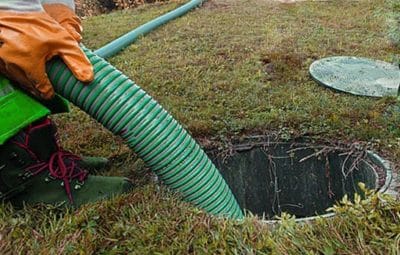
Pumping the tank is a key step in a full  septic system inspection.

A full inspection will cover the septic tank, distribution box, and leach field, as well as the underground connections and any other equipment such as pumps, if used. It will require some minor excavation, which could be an issue for the current owner.


The town may also require a new perc test depending on local regulations and how long the system has been out of use. Again, check with the local health department.

I’m not sure how long the system has been unused, but a long pause can help a clogged system recover  due to the natural breakdown of the biomat that forms in the drain field trenches. However, if heavy equipment was brought in for fire-fighting  or other work,  that could have damaged the tank or  underground piping, or the leach field itself by compressing the soil.

A complete inspection, which may cost $500 or more,  can tell you if a septic system is working properly at the time of the test, but it can’t tell you how long the system will last.

To estimate  the septic system’s  remaining lifespan,  you will need to know the installation date of the system, how heavily it was used, how frequently it was pumped, and how well it was maintained. Even then, you will be making, at best, an educated guess as there are too many variables to make an accurate prediction. – Steve Bliss, BuildingAdvisor.com

Read More at    Well Drilling Basics      Well Drilling Q&As     Perc Testing

See Also:
Are Alternative Systems Allowed?
Chamber System Failure
How Much Slope For Septic Line?
Inspecting a Septic System
Lifespan of Septic System’
Minimum Lot Size For Septic System
Perc Test Cost
Perc Test: Best Time of Year?
Replacing Failed Drain Field in Same Location
Retesting a Site That Failed to Perc
Sand Filter for Existing System
Testing an Existing Septic System
Testing for a New Septic System
Wet Sites, Septic Systems For
Who Performs Perc Test?
View all SEPTIC SYSTEM articles

Q&A Index


Filed Under: Buying Land, Kitchen & Bath, Sitework Tagged With: Plumbing, Septic Systems, Water Wells

Reader Interactions

Leave a Reply Cancel reply

Your email address will not be published. Required fields are marked *

Primary Sidebar

Visit Inspectapedia.com our Sister Site

Secondary Sidebar


ESTIMATING SPREADSHEET SPECIAL

Only $19.95 for Lifetime License LEARN MORE


Share this article


Q&A INDEX


Recent Posts

  • Best Approach to Hot-Climate Cathedral Ceiling
  • Frost-Protected Shallow Foundations
  • Patios & Decks for Coastal Homes
  • Can I Foam Basement Wall With Existing Studs?
  • Is Top Railing On Deck Code-Approved?

Copyright © 2026 · Magazine Pro for Building Advisor on Genesis Framework · WordPress · Log in